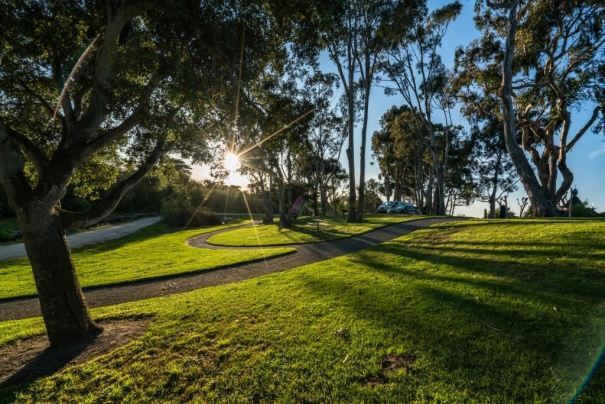
As coastal advocates, we know that what happens on land directly impacts the health of our ocean. Joining local efforts to protect waterways is the embodiment of, “think globally, act locally.” An effort to protect the watershed, benefits the coastal ecosystem far beyond. On the other hand, projects that damage local coastal ecosystems will cause far reaching harm to our oceans, waves, and beaches. Right now, our community in Pacific Palisades faces a critical decision regarding the Palisades Recreation Center—a beloved green space just steps from the coast.
Surfrider Foundation Los Angeles is proud to stand alongside Resilient Palisades and a broad coalition of environmental, community, and ocean-advocacy organizations—including Heal the Bay, Los Angeles Waterkeeper, 5 Gyres, and Beyond Plastics—to say: preserve the dream and keep our park naturally green.
The Issue: Bypassing Coastal Oversight for Artificial Turf
Plans are moving forward to replace the park's natural grass with synthetic turf, bypassing the standard environmental review and oversight of the California Coastal Commission. Proponents of the artificial turf project are attempting to fast-track the installation by claiming it falls under the purview of a Governor’s executive order intended to support fire restoration. However, the original grass field at the Palisades Recreation Center did not sustain damage in the Palisades Fire.
California Coastal Commission has put Los Angeles on notice including writing to Mayor Karen Bass. Approximately 1,500 square feet of artificial turf is proposed at the Palisades Recreation Center & Park, which lies partially within the Coastal Zone. That new artificial turf will introduce harmful pollutants, including, but not limited to, harmful microplastics, into the Coastal Zone and nearby sensitive environments – contributing to the rapid growth of microplastics in our water supply which ultimately find their way into our bodies.
Converting the existing playing field from natural turf to artificial turf requires a coastal development permit from the City of Los Angeles, and a permit from the Commission for the portions of the field located within the Dual Permit jurisdiction area.
Using emergency fire-restoration exemptions to circumvent Coastal Commission oversight for an undamaged field undermines the very protections designed to safeguard our coastline, watersheds, and public health. The executive order was meant to help restore homes and livelihoods. This abusive of the executive order should concern anyone interested in the future health of the Palisades and California Coast. The focus should remain on restoration, not taking advantage of the crisis to jam through pet projects.
Turf fields cause far reaching devastation - plastic pelts will spread contributing to pollution on our beaches. Individually, they go unnoticed, but as more accumulate, toxic chemicals leach into the environment. Several chemicals in plastics have been found to be carcinogens, neurotoxins, among other toxic effects and can be lethal or have sub-lethal effects that impair the survival and reproduction of organisms.
Similarly, small attacks on the Costal Commission accumulate and cause bigger problems down the line. For 50 years, the Coastal Commission has protected California’s coast allowing us to enjoy public access to miles of healthy coast. A turf field is not worth a chink in the armor of this important entity. Threats to our coast are ever increasing, and the strength of the Coastal Commission is vital to maintaining our coastal environment and economy for generations to come.
Why Natural Grass Matters to Our Ocean and Community
Replacing soil and grass with plastic turf poses serious environmental and health risks that run counter to Surfrider values:
- Ocean and Watershed Pollution: Artificial turf is a massive source of microplastic pollution. Over time, plastic blades and crumb rubber infill break down and wash into storm drains, flowing directly into the ocean and polluting our local beaches. Because Palisades Recreation Area is only about a mile from the beach, this increases the speed at which plastic from the turf field will enter the ocean.
- Toxic Chemical Runoff: Synthetic fields often contain PFAS ("forever chemicals"), heavy metals, and volatile organic compounds that can leach into groundwater and coastal waters during rain events.
- Extreme Heat Islands: Unlike natural grass, which cools the surrounding air through evapotranspiration, plastic turf absorbs solar radiation and can reach surf temperatures that are unsafe for children, athletes, and pets.
- Loss of Living Ecosystems: Natural grass sequesters carbon, absorbs stormwater runoff naturally, and supports local soil biodiversity. Whereas synthetic turf creates a sterile, non-recyclable plastic waste burden at the end of its lifespan.
Take Action Today: Your Voice Can Save Our Park and Support the Coastal Commission
We cannot allow emergency orders to be misused to bypass coastal protections and install polluting plastic turf in our public parks. Nealy 10,000 letters have already been sent to local decision makers. Visit the Resilient Palisades Letter-Writing Campaign to send a pre-written message to key decision-makers or personalize it with your own thoughts on why you oppose turf for this project.
Every message helps show local leaders and state officials that our community demands transparency, proper Coastal Commission oversight, and safe, healthy, natural playing fields. Together, we can keep the Palisades Recreation Center a vibrant, safe, and naturally green space for generations to come. Let’s keep plastic out of our parks and out of our ocean!