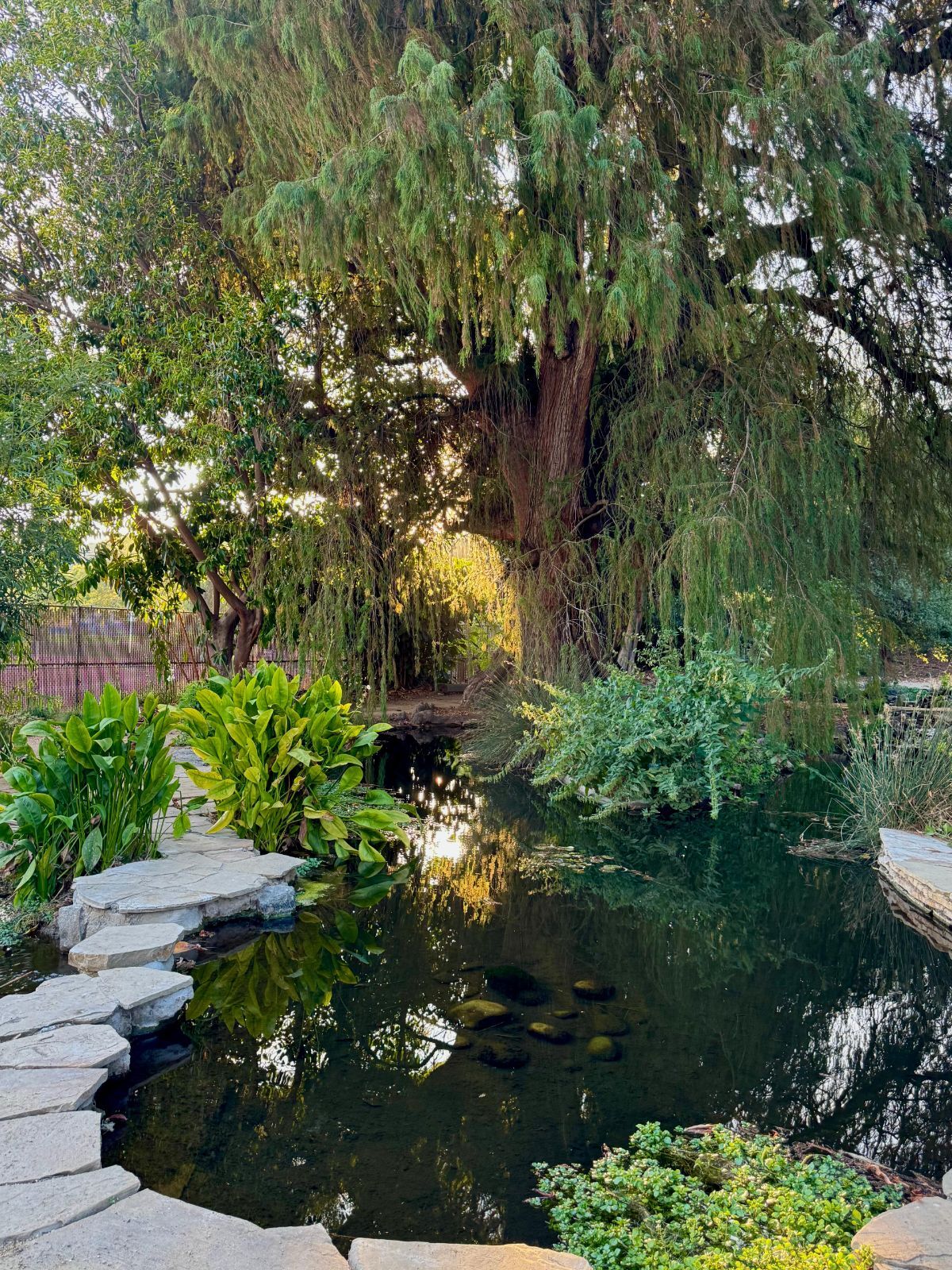
Stepping into Kuruvungna Village Springs, felt like entering the secret garden. From the road, you pass a tall metal fence framing a parking lot. If you've slowed down at all, maybe you notice some unusually tall trees on the edges. Once you enter the gates, nature instantly transports you somewhere that feels miles from LA.
Kuruvungna Village Springs hosted Surfrider LA for our June Open House with a panel of experts on water, Ocean Friendly Gardens, and Traditional Ecological Knowledge. Kuruvungna translates to, "place where we are in the sun." Archeological evidence suggests that this place has been inhabited for about 8000 years.
Over those 8000 years, water had a different meaning and relationship to the native inhabitants of this land than it does today. There is a history of bad water management in the city. For too long, city planners have ignored Traditional Ecological Knowledge in favor of faster "solutions." In fact, as Annie Mendoza-Olivares, Paya/Paar Outreach Director, Owens Valley Indian Water Commission and Director of "The Aqueduct Between Us," described, use of the word solutions itself is telling - the common view of water in LA today is as a problem to be dealt with. Too often, its assumed that there will be too much or too little, and we need concrete and infrastructure to fix that imbalance. We've colonized our views on water and cost ourselves more holistic policies that could serve future generations for longer.

Storm water is a major source of pollution in our water ways in LA. When it rains, pollutant, debris, and bacteria from our streets and rooftops get washed into the watershed - eventually ending up in the ocean. Nationwide, this causes over 20,000 beach closures and advisories annually. Left to nature, water could be filtered through through the ground where it would take longer to reach the ocean and shed debris as it goes. Unfortunately, overuse of pavement and reluctance to adopt more "nature-based solutions," leads to more runoff, ultimately degrading our ocean water quality.
On our tour of the springs led by Kathryn Dressendorfer, Surfrider's Ocean Friendly Gardens Manager and Daniel Ramirez, Land Steward Team of the Gabrielino Tongva Spring Foundation, we saw examples of bioswale and rain gardens, which serve to reduce runoff using the contours of the land and plants. Adopting these solutions at scale is challenging because its hard to measure the volume of water they redirect, said Dressendorfer. The most efficient infrastructure is not always the most sustainable solution or the best for communities. Reducing runoff will produce long term gains of clean beaches to enjoy, readily available water, and stronger marine ecosystems.
Its time to reimagine our relationship with water in LA. Our capped springs, buried creeks, and concrete waters ways are not just challenging infrastructure to be managed, but precious resources to protect as illuminated by Tanishka Chellani, Research Associate, Council for Watershed Health. By rethinking our solutions we can create habitats for native species, benefit soil and ecosystems, and provide places to build community.
Places like Kuruvungna Village Springs don't have to feel like the exception. If we challenge our assumptions and shift our approach to planning, we can experience more nature within the city. We can learn to work with nature to reduce pollution and strengthen our resources.
To support efforts to improve water use in LA:
-
Kuruvungna Village Springs hosts monthly volunteer days
-
Take action at home by making your own space ocean friendly - check out where to buy native plants in LA
-
Stay engaged with the California Water Commission to learn about water infrastructure projects and voice your support for nature-based solutions.
Surfrider LA acknowledges that we operate on the ancestral and unceded homelands of the Tongva, Tatavium, and Chumash peoples. This blog uses the terms, Traditional Ecological Knowledge and Nature-Based Solutions because they are most common within urban planning. However, we acknowledge that in many cases those terms were ascribed to indigenous communities and may not accurately reflect the opinions of all indigenous people or fully appreciate the knowledge of native communities.