Sitting at the stoplight, I savored the rhombus of blue framed by buildings at the bottom of the hill. Whenever I catch an unexpected glimpse of the ocean like that, I feel like a kid again. Rounding out days-long road trips from the Midwest, those small frames of the ocean between buildings ignited something that couldn't be quieted until I'd dipped my toes in the water. Being compelled by the ocean at first sight is part of our shared humanity.
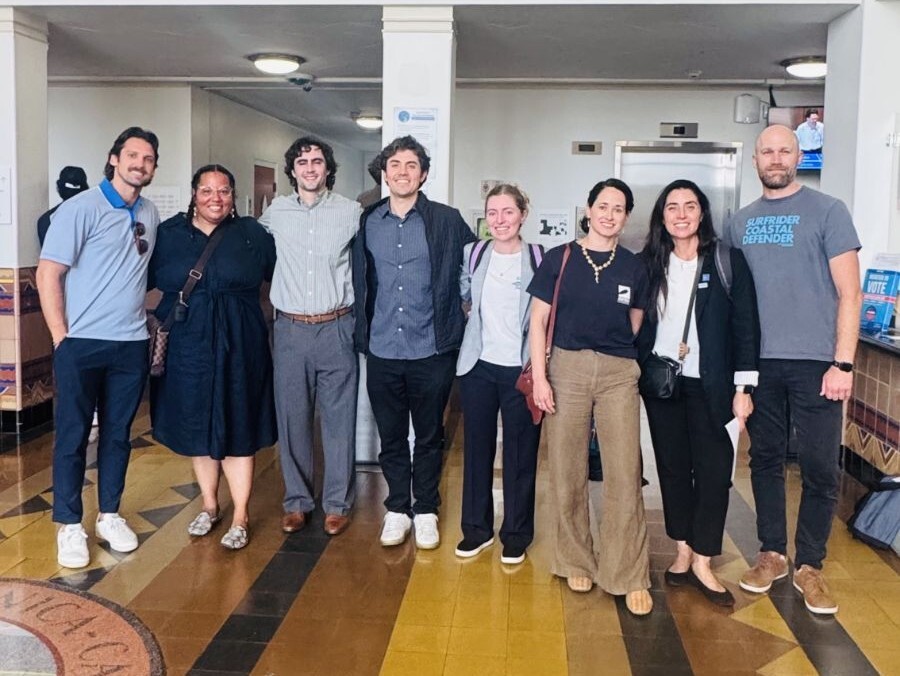
The light turned green and it struck me; this is why I was really going to the Santa Monica City Council meeting. Imagine, if you could only steal broken glimpses of the ocean, but never enjoy it. That's what we risk if AB 1740 passes. On May 12, representatives from the Surfrider Foundation and LA Chapter spoke at the Santa Monica City Council meeting on the imperative to oppose AB 1740 and the importance of a strong Local Coastal Program (LCP)
What is AB 1740
AB 1740 has been framed as a climate‑forward, transit‑friendly update to coastal rules. However, it is only using the language of sustainability to mask a sweeping rollback of California's Coastal Act oversight. While the bill highlights bike lanes, transit access, and housing as justification, it would carve out broad exemptions from coastal development permits in Santa Monica, allowing a wide range of projects to move forward with less scrutiny. This bill jeopardizes what California's Coastal Act has protected for 50 years - public access and coastal ecosystems. AB 1740 sets a dangerous precedent; once one city is allowed to sidestep the Coastal Act by branding itself as “multimodal” or “climate conscious,” it opens the floodgates for other coastal communities to demand similar treatment, eroding protections up and down the coast. In the long run, we could see quietly diminished beach access, degraded coastal views, and ecosystems. If AB 1740 is passed, the promise of the California coast as a shared resource slips away under the guise of progress.
Why an LCP is Vital
A strong LCP is a better way to streamline the bureaucratic processes surrounding coastal development, Mitch Silverstein, Surfrider's California Senior Policy Coordinator, stated when addressing the council. LCPs take the backbone of the Coastal Act and bring it down to the local level, giving communities a real say in how their stretch of coast is shaped while still holding the line on access, habitat, and water quality. LCPs lay out what kind of development belongs where, how to protect sensitive ecosystems, and how to keep the shoreline open and accessible for everyone. A strong LCP is a promise for faster, more responsive local decision-making paired with enforceable rules that prioritize public access, coastal recreation, and environmental protection over short-term gains.
Eugenia Ermacora, Surfrider LA Chapter Manager, addressed the council, stating that with a completed LCP, Santa Monica could take local control over 90% of coastal zone developments. This includes most of the types of coastal zone developments marked for exemptions under AB 1740, but maintains the important Coastal Act protections. Santa Monica is one of the few coastal cities that does not currently have an LCP.
Why do we oppose this bill?
Voices on behalf of Surfrider outlined additional concerns for public access and environmental protection, such as:
- Events: Under AB 1740, the bar for events in the coastal zone is significantly lowered. To be allowed under the bill, an event can't "unduly obstruct" access. Nebulous as it is, it opens the door for massive privatization of public beaches.
- Low cost amenities: The Coastal Act protects low cost accommodations in the coastal zone. Under AB 1740, these could be razed for condo development, making the beach the exclusive playground of the wealthy.
- Housing: The bill does not include any affordable housing requirements and treats all housing the same. In other words, exacerbating Santa Monica's existing failures in affordable housing goals.
- Environmental protections: This bill exempts developments landward of the PCH and more than 300 feet from the high-tide line. Environmental hazards don't stop at 300 feet. The Coastal Commission has expertise in addressing flooding, groundwater emergence, and sea level rise vulnerabilities which AB 1740 ignores.
- Parking and bike lanes: Although we support safe streets, active transportation, and public transit that makes coastal access easier with lower emissions; driving is still the primary way most inland families reach the beach due to limited public transit options.
Andrika Payne, Co-Lead for the One Watershed Program, shared her firsthand experience bringing children to the beach, many for the first time ever, for surf lessons and ocean education. These educational opportunities "depend on beaches remaining affordable, accessible, and welcoming to everyone," she said.
Santa Monica has a choice to set a dangerous precedent by supporting AB 1740 or to be a leader in coastal victories through completing a strong LCP. Feeling that the ocean is there for all of us sets the stage for how we steward it the rest of our lives. In a coastal community, how we treat the ocean, is a pillar and a reflection of how we treat our communities. Through a strong LCP, the council can achieve solutions that expand housing while also providing environmental safeguards and protecting equitable coastal access. We all deserve more than just passing glimpses of the ocean, a strong LCP ensures it's something generations to come can reach.